
Restaurant Uniforms: How to Outfit Front of House and Kitchen Staff With Custom Apparel
Posted on 14 May 2018
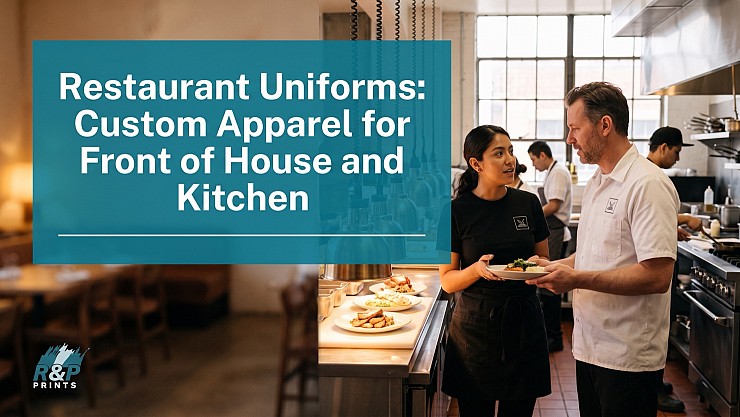
At a Glance
- Restaurant uniforms are the set of branded garments your staff wear on shift: tees, polos or button-ups for front of house, chef wear and aprons for the kitchen, and caps or toques where hair has to be covered.
- A good uniform does three things at once: it tells guests who works there, it carries the brand at every table, and it holds up to a shift and a commercial wash.
- Embroider the pieces that get washed hard and seen up close, such as polos, aprons and caps; screen print the pieces ordered in bulk, such as tees and hoodies.
- Aprons are the one garment every restaurant orders, and a well-chosen apron with a stitched logo outlasts almost everything else in the kit.
- R&P Prints Canada prints and embroiders restaurant uniforms in Toronto with a 12-piece minimum, a proof before production and free shipping across Canada.
Restaurant uniforms are the branded garments a restaurant, cafe or bar provides for its staff to wear on shift, usually a top for front of house, chef wear or a tee for the kitchen, an apron, and headwear where it's required. The uniform marks who is working, carries the brand into every interaction with a guest, and has to survive long shifts and frequent washing without losing its colour or shape.
Guests remember service as much as food, and the uniform is part of how that service reads. A server in a crisp branded polo looks like part of a team, a cook in a clean embroidered chef shirt looks like a professional, and both make the brand feel organized before anyone has tasted anything. R&P Prints Canada has outfitted restaurants, cafes and hospitality groups from our Toronto shop since 1999, and this guide covers what we've learned about building a uniform set that looks right, lasts, and is easy to reorder, starting with the commercial screen printing and embroidery that go into it.
What Does a Restaurant Uniform Program Include?
A restaurant uniform program is the full set of branded garments, in the right sizes and quantities, with a plan for replacing them. It usually has four parts: front-of-house tops, kitchen wear, aprons and headwear. The most useful early decision is how formal each part should be, because formality decides the garment and the garment decides the decoration method.
A casual spot might run everything on branded t-shirts and waist aprons. A full-service dining room tends toward polos or button-ups for servers and embroidered chef shirts in the kitchen. A cafe often lands in between, with a branded tee or henley and a bib apron that does most of the visual work. There's no wrong answer, and the best programs match the uniform to the room rather than to a template.
Front of House: What Guests See at the Table
Front-of-house staff are the uniform's main audience, because they're the only workers most guests see. The garment should be comfortable for an eight-hour shift, easy to keep clean, and branded in a way that reads from a few feet away without dominating.
Polos and button-up shirts are the standard for sit-down service, and custom polo shirts with a small embroidered left-chest logo are the most common piece we produce for restaurants. Branded t-shirts suit casual, fast-casual and patio service and are the economical choice when a large team needs several shirts each. Hats, toques and visors round out the set for counter service and patios, and custom caps and headwear with a stitched front logo match the polo for a coordinated look.
The branding itself should be consistent and modest: one logo, one position, one thread or ink colour across every front-of-house piece. Guests notice the consistency more than the size of the mark.
Kitchen and Back of House: Built for Heat and Washing
Kitchen wear has a harder job than anything worn out front, because it gets hot, it gets stained, and it goes through a commercial wash after every shift. The classic answer is a chef shirt or coat in a durable cotton or cotton-polyester blend, worn with a bib apron and a cap or skull cap where hair has to be covered.
Whether to brand the kitchen at all depends on who can see it. Open kitchens, food trucks, counter-service restaurants and anywhere the line is visible from the dining room benefit from the same logo the front of house wears, usually embroidered on the chest of a chef shirt or printed on a heavyweight tee. A closed kitchen can run plain chef wear with a branded apron, which keeps the cost down and still looks unified when a cook steps out to the pass.
For kitchen tees, choose a heavier cotton that holds its shape through hot washes, and keep the print to one colour on the chest or sleeve, where it sees less abrasion. Our guide to embroidery vs screen printing goes deeper on which method suits which garment.
Custom Aprons: The Piece Every Restaurant Needs
Every restaurant orders aprons, and the apron is often the only branded garment a guest sees up close when a server leans in to take an order. It deserves more thought than it usually gets. The three styles cover most needs: a waist apron for servers who need pockets and freedom of movement, a bib apron for cooks and baristas who need coverage, and a cross-back apron, which takes the weight off the neck for long shifts and has become the signature look of many cafes.
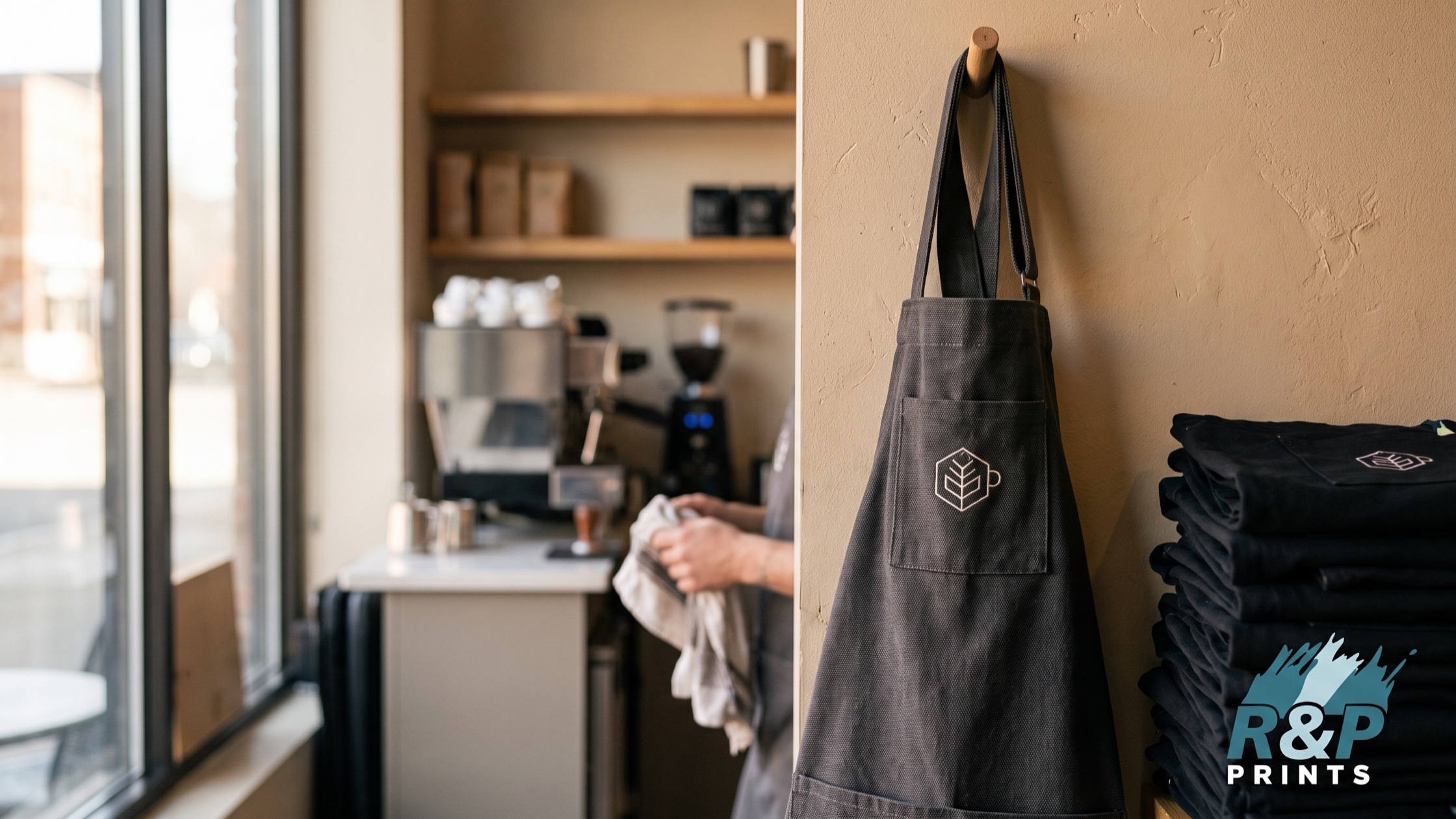
Fabric matters here more than anywhere else in the kit. Heavy cotton canvas and twill resist stains, hold an embroidered logo cleanly and survive hundreds of washes; a lightweight poly-cotton apron is cheaper but looks tired within a season. Embroidery is the better decoration for most aprons because the stitched logo sits in the thick fabric and never fades or cracks under a hot wash, while a printed logo on a canvas apron can look worn where it folds. Aprons sit within our custom workwear range alongside the chef wear and heavy tees the kitchen needs.
Order aprons in a higher quantity than the headcount suggests. They're the garment that gets stained, borrowed and left behind, and a stock of extras means a clean one is always on the hook.
Which Pieces Should Be Embroidered, and Which Printed?
Both methods have a place in a restaurant program, and the split usually follows the garment. Embroidery is the right choice for the pieces that are washed hardest and seen closest: polos, aprons, chef shirts and caps. The stitched logo holds up to commercial laundering for years, reads as premium at the table, and matches across different garments because it's the same digitized file every time. We handle custom embroidery in-house, with the logo digitized once and kept on file.
Screen printing is the right choice for bulk pieces with a simple logo: staff tees, kitchen tees, hoodies for the patio and winter, and merchandise the restaurant sells to guests. A one- or two-colour print on a heavyweight cotton tee is economical at crew quantities and holds its colour through regular washing when it's properly cured. For a team ordering a few shirts per person, bulk t-shirt printing brings the per-piece cost down quickly.
Keep the logo file, the Pantone code and the thread colour the same across both methods, so an embroidered polo and a printed tee look like they came from the same brand book, which they did.
Fabrics That Survive a Shift and a Commercial Wash
The fabric decides whether a uniform looks good in month six. For front of house, a cotton-polyester pique polo resists wrinkles, dries quickly and holds an embroidered logo well, and a ring-spun cotton tee is soft enough for a long shift and sturdy enough for daily washing. For the kitchen, heavier cotton and cotton-poly blends take heat and stains better than lightweight fashion tees, and dark colours hide what the shift leaves behind.
Two rules keep a uniform program looking fresh. Wash dark garments inside out in cold water, which protects both prints and embroidery, and retire a piece when the collar or hem goes rather than when the logo does, because the branding will almost always outlast the garment.
Sizing a Mixed Crew and Planning Reorders
Restaurant teams change, so the uniform program should be built to be reordered rather than ordered once. Start with a headcount by size for the garment you've actually chosen, since a Gildan medium and a Bella+Canvas medium fit differently, and give staff two to three of each piece so a clean set is always ready. Then add extras in the middle sizes for new hires and replacements.
At R&P Prints Canada the minimum is 12 pieces per design, there are no setup fees, and we send a digital proof showing the logo in position before anything is stitched or printed. Standard turnaround is 5 to 10 business days from approval, shipping across Canada is free, and because we keep the artwork and screen details on file, a reorder for three new servers comes out matching the original run. Many restaurant groups schedule a standing reorder each season so the kit never runs short.
How to Budget a Restaurant Uniform Program
Think in pieces per person rather than in a single lump. For each role, list the garments, multiply by the number of sets each person needs, and add a stock of spares, especially aprons. Then decide which pieces are embroidered and which are printed, because that split, along with the quantity and the garment, is what sets the price. Embroidery is priced on stitch count, complexity and quantity; screen printing on quantity, ink colours and print locations. Send us the list and the artwork, and the itemized quote comes back within 24 hours with every line visible, so you can trim a piece or change a method before committing.
Get a Quote for Restaurant Uniforms From R&P Prints Canada
R&P Prints Canada has printed and embroidered uniforms for restaurants, cafes, bars and hospitality groups since 1999, all of it in our own Toronto shop and shipped free across Canada. Send us your logo, the roles you're outfitting and a headcount by size, and we'll recommend the garments and methods for each, show you the logo in position on a proof, and have an itemized quote back within 24 hours. Call 1-877-646-5111 or request a free print estimate at printscanada.com.
Frequently Asked Questions
What should a restaurant uniform include?
A complete restaurant uniform covers a top, an apron and headwear where it's needed, chosen separately for front of house and the kitchen. Servers usually wear a branded polo, button-up or t-shirt with a waist apron, while cooks wear a chef shirt or heavyweight tee with a bib apron and a cap or skull cap. The branding should be consistent across every piece, usually one logo in one position, so the team reads as a unit whether a guest sees a server at the table or a cook at the pass.
Are embroidered or printed uniforms better for restaurants?
Use both, and let each garment decide which method it gets. Embroidery suits polos, aprons, chef shirts and caps because the stitched logo survives commercial laundering for years and looks premium up close at the table. Screen printing suits bulk pieces with a simple logo, such as staff tees and hoodies, where a one- or two-colour print on heavyweight cotton is economical at crew quantities and holds up to regular washing. Keep the same logo file and colours across both so the set matches.
What fabric is best for restaurant uniforms?
Choose fabric for the job the garment does. Front-of-house polos in a cotton-polyester pique resist wrinkles and dry fast, and ring-spun cotton tees stay comfortable through a long shift. Kitchen wear needs heavier cotton or cotton-poly blends in dark colours that take heat, stains and hot washes. Aprons should be heavy cotton canvas or twill, which holds an embroidered logo cleanly and lasts hundreds of washes, rather than lightweight poly-cotton that looks tired within a season.
How many uniforms should I order per staff member?
Plan on two to three sets of each piece per person, so a clean uniform is always available between washes, and add spare aprons and middle-size tops for new hires and replacements. Count sizes against the specific garment you've chosen rather than a generic chart, since brands cut differently. Because we keep your artwork on file, topping up the kit for new staff later is a quick reorder that matches the original run.
What is the minimum order for custom restaurant uniforms?
The minimum at R&P Prints Canada is 12 pieces per design, which fits most restaurant orders even for a small cafe once you count tees, aprons and spares. There are no setup fees, the price per piece falls as the quantity grows, and every quote is itemized so you can see the cost of each garment and method. If one piece in the set is needed in a smaller quantity, tell us and we'll suggest the most practical way to handle it.