Design Your Own T-Shirt: Step-by-Step Guide for Beginners
Posted on 31 March 2026
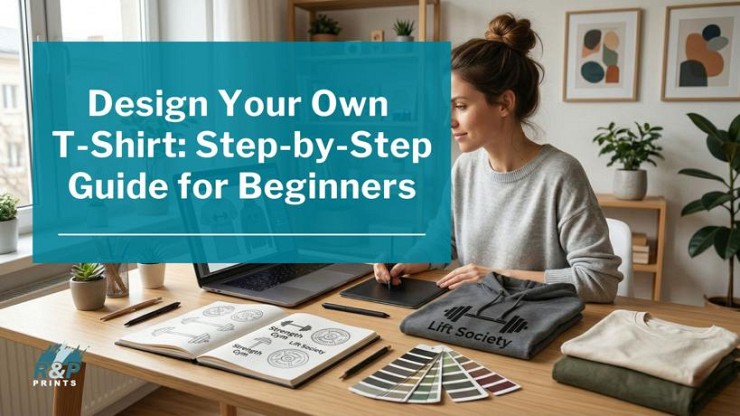
Designing your own t-shirt can feel exciting and intimidating at the same time. You have an idea. You have a purpose. But translating that idea into a print ready design that looks good on fabric is where many first time customers get stuck.
This guide is designed to remove that friction. Whether you are creating custom shirts for a business, an event, a team, or personal use, the process becomes far easier when you understand how printing works before you upload a file.
Designing for print is not about artistic perfection. It is about clarity, preparation, and knowing what printers actually need to deliver clean, reliable results. When those pieces are in place, custom apparel becomes a smooth, rewarding experience instead of a back and forth of revisions and delays.
Start With Purpose Before You Start Designing
Before opening any design software, step back and define why this shirt exists. Is it promotional apparel for a business or brand? Is it for an event, fundraiser, or team? Is it meant to be worn regularly or just once? These answers influence everything from colour choice to shirt material to printing method, especially when planning for custom t-shirt printing in Canada and beyond.
Understanding your audience matters just as much. A t-shirt designed for employees, customers, or students will look very different from one designed for retail sale. Simpler designs often perform better when worn frequently. Bold designs work well for events and visibility.
When purpose and audience are clear, your design decisions become easier. You avoid overcrowding. You choose colours that make sense. You end up with a shirt people actually want to wear, not just something that looks good on screen. This clarity upfront is one of the biggest reasons beginner designs succeed on the first print run.
For a structured, education-based breakdown of how purpose, audience, and production considerations intersect in print design, Manitoba Education’s Print Media curriculum provides a helpful academic overview.
Gathering Inspiration Without Copying Someone Else’s Work
Inspiration is part of the process, but it should guide your direction rather than dictate your final result. Look at typography styles, layout balance, colour combinations, and how graphics sit on apparel. Pay attention to spacing and scale. Notice how professional designs leave room to breathe instead of filling every inch of fabric, which helps set the foundation for print ready artwork later in the process.
Save references for mood, not imitation. Your goal is to understand what works visually on a t-shirt, not to recreate another brand’s design. At this stage, sketching ideas on paper can be surprisingly helpful. It allows you to think in shapes and placement rather than pixels. A rough sketch often prevents over designing later on. Strong designs usually start simple and become refined, not complicated and then forced to scale back.
Choosing Between DIY Design or Working With a Designer
Many first time customers at R&P Prints Canada ask whether they should design the t-shirt themselves or hire a professional. DIY design tools are more accessible than ever. Platforms like Canva, Illustrator, or basic design apps can produce solid results when used carefully. If your design is text based, logo driven, or minimal, DIY is often enough.
Working with a designer makes sense if your project is complex, brand critical, or intended for resale. Designers understand spacing, hierarchy, and how designs translate from screen to fabric.
The key is not who designs the t-shirt, but whether the final file meets printing requirements. Even professionally designed files sometimes need adjustments for production. This is where guided review matters more than design talent alone.
Understanding Design Elements That Print Well on Fabric
Designing for apparel is different from designing for digital screens. Fine details can disappear on fabric. Thin lines may break. Colours can behave differently on cotton than they do on a monitor. High contrast designs usually print more reliably than subtle gradients. If you want a deeper understanding of how colour accuracy and reproduction are evaluated in print, the Government of Canada outlines formal colour reproduction standards used in professional production environments.
Typography should be legible from a distance. Decorative fonts may look appealing but can become unreadable when scaled down. Clean, bold typefaces often outperform elaborate ones.
Spacing matters more than beginners expect. Designs need margin around edges to prevent crowding or misalignment during printing. Centred designs are forgiving. Full front designs require careful sizing. These considerations are what separate a design that looks good digitally from one that looks great on a t-shirt.
McMaster University’s digital and print guidelines offer a clear academic explanation of why colour spaces and layout decisions affect printed results.
Selecting the Right T-Shirt Type and Fabric
Your design does not exist in isolation. It interacts directly with the garment you choose. Cotton shirts are versatile and comfortable. Blends can offer softness and durability. Heavier fabrics hold prints differently than lightweight ones.
Colour choice matters. Light shirts handle dark designs easily. Dark shirts require different printing approaches for light artwork.
Fit also plays a role. A design placed too low or too wide can distort when worn. Knowing the cut and size range helps position artwork correctly. When customers understand garment options early, they avoid redesigning later to fit a shirt that does not support their original concept.
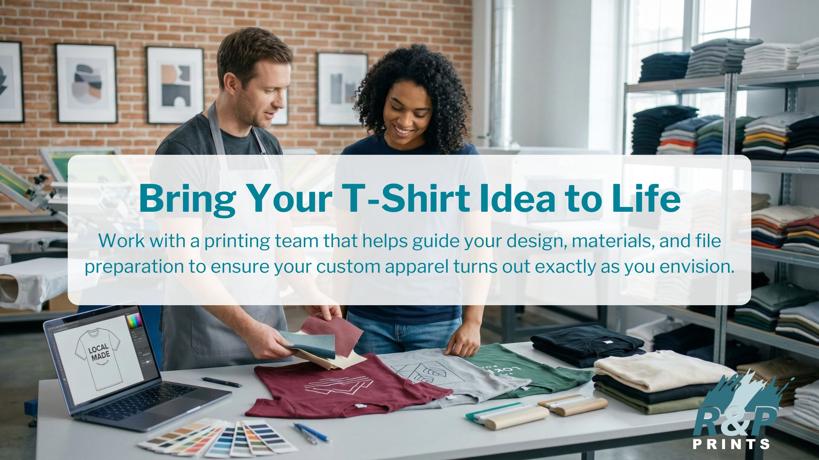
Choosing Printing Methods That Match Your Design
Not every design works with every printing method. This is where many beginner mistakes happen. Simple designs with limited colours often work well with screen printing t-shirts because it produces vibrant, durable results for larger quantities.
Detailed designs or full colour artwork may be better suited for digital printing depending on order size and complexity.
The right method balances design detail, quantity, fabric type, and budget. Choosing the method after designing instead of before can create unnecessary limitations. Understanding this early makes custom apparel printing smoother and more predictable.
Setting Up Your Artwork Correctly From the Start
This is where many first time projects slow down. Printers require specific file setups to produce clean results. Resolution matters. Colour mode matters. Sizing matters.
Files should be created at the final print size whenever possible. Low resolution images pulled from websites rarely print well. RGB colours may need conversion to print friendly formats. Submitting properly prepared files reduces delays, prevents quality loss, and keeps production moving efficiently. It also reduces the need for revisions that push timelines back.
When artwork is prepared correctly, printing becomes execution rather than troubleshooting. Simon Fraser University provides a practical prepress resource outlining common mistakes when preparing files for print, which may align closely with these requirements.
Avoiding Common Design File Errors Before You Upload
Many delays in custom apparel orders come from small, fixable issues. Missing fonts. Incorrect sizing. Transparent backgrounds that were not intended. Colours that shift unexpectedly. These are all examples of design file errors that slow production.
Experienced printers review files before printing to catch these issues. This quality control step protects both the customer and the final product. Knowing these risks upfront helps beginners submit stronger files and move through production with confidence rather than surprise corrections. For additional insight into colour conversion and file preparation for print, the University of Ottawa provides a concise academic reference on working with RGB and CMYK files.
Placing Your Order With Confidence and Clarity
Once your design and garment choices are finalised, ordering should feel straightforward. Provide clear quantities, sizes, colours, and delivery timelines. Double check artwork placement and approval proofs carefully. This is the last opportunity to confirm everything matches your expectations.
For businesses and organisations, planning ahead allows for smoother timelines and better pricing. This is especially important for bulk t-shirt printing where volume amplifies both success and mistakes. Clear communication at this stage keeps production efficient and predictable.
Understanding the Production Process After You Click Submit
Many first time customers assume printing starts immediately after upload. In reality, there is a structured process designed to protect quality.
Files are reviewed. Adjustments may be recommended. Proofs are confirmed. Production is scheduled. Printing, curing, and finishing all take place before packaging.
This workflow ensures consistent results, especially during busy seasons. It also allows time for questions and corrections before ink ever touches fabric. Knowing what happens behind the scenes builds trust and reduces anxiety while waiting for delivery.
Expanding Beyond T-Shirts as Your Needs Grow
Once customers experience a smooth first order, many expand into other apparel. Design principles remain similar when moving into custom hoodies printing, hats, or other garments. The main differences are sizing and fabric behaviour.
Starting with a well executed t-shirt builds confidence for future apparel projects and larger campaigns. Consistency across apparel strengthens brand recognition and professionalism.
Why Choosing the Right Printing Partner Matters
A printing partner does more than produce shirts. They guide customers through decisions that affect timelines, quality, and cost. Reliable t-shirt printing involves education, review, and support, not just an upload button.
For customers ordering within Canada, working with a provider experienced in t-shirt printing in Canada like R&P Prints Canada ensures faster turnaround, clearer communication, and predictable results. When printers combine customer education with in house expertise, apparel projects become collaborative instead of transactional.
Designing Your First T-Shirt With Confidence
Designing your own t-shirt does not require expert level design skills. It requires preparation, clarity, and support. When beginners understand how printing works, choose the right materials, prepare files correctly, and work with a knowledgeable printing team, the process becomes smooth and empowering.
Great apparel starts with thoughtful design decisions and ends with reliable execution. When both sides are aligned, custom t-shirts become something customers are proud to wear, share, and reorder.