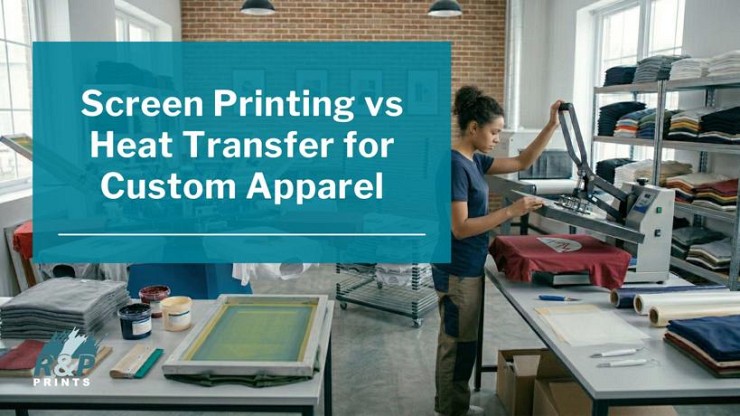
Screen Printing vs Heat Transfer for Custom Apparel
Posted on 18 December 2017
Custom apparel plays a bigger role than many people expect. It represents teams, brands, events, and businesses in everyday settings. The printing method behind that apparel determines how it looks, how it wears, and how long it lasts. Screen printing and heat transfer remain the two most common approaches, yet they serve very different purposes.
What often causes confusion is that both methods can produce attractive results at first glance. The difference shows up later, after repeated washing, regular wear, or when scaling an order. Understanding those differences upfront helps avoid disappointment and ensures your apparel performs the way it is meant to in real world conditions.
At R&P Prints Canada, the focus is on helping customers choose based on real use, not assumptions. Quantity, fabric, design detail, and how often the garment will be worn all influence the right decision. This guide explains those differences clearly so expectations match results.
Overview of Screen Printing and Heat Transfer
Screen printing and heat transfer are both widely used apparel printing services, but they rely on fundamentally different processes.
Screen printing applies ink directly through a mesh screen that has been prepared using a screen printing stencil. Each colour in a design requires its own screen, allowing ink to bond directly with the fabric. Once cured, the print becomes part of the garment rather than a layer on top. This approach is especially effective for consistency across large runs and repeat orders.
For a government-backed technical overview of how screen printing works in industrial settings, the U.S. Department of Labor provides a clear explanation through OSHA’s Printing Industry eTool.
Heat transfer printing uses heat and pressure to apply a design onto the surface of a garment. This may involve vinyl, digitally printed transfers, or a heat transfer stencil. The process is highly adaptable and often more user friendly for small runs or detailed artwork. The finished print sits on the fabric surface rather than absorbing into it.
Comparison of Print Quality and Durability
Print quality is not only about appearance on day one. It is about how the garment performs after repeated washing and regular wear.
Screen printing produces a matte, embedded finish that maintains colour accuracy over time. Because the ink penetrates the fabric fibers, it resists cracking and fading even after many wash cycles. For organizations seeking long lasting t-shirt printing, screen printing remains a reliable, professional option for apparel that is worn frequently.
Heat transfer printing delivers crisp lines, smooth finishes, and vibrant promotional images, particularly for complex artwork. However, because the design rests on the surface, it is more vulnerable to wear. Over time, heat applied during drying or ironing can affect adhesion. For light use or short term campaigns, this tradeoff is often acceptable.
Scientific context around printing inks and transfer behavior can be found in the NIH’s technical reference on printing technologies and materials.
Design Flexibility and Material Compatibility
Design flexibility is one of the strongest advantages of heat transfer printing.
Heat transfer allows for full colour images, gradients, photographic elements, and highly customized prints without requiring multiple screens. This makes it well suited for small scale productions, short runs, and personalization such as names or numbers. It is also commonly used by print-on-demand store models that require frequent design changes.
Screen printing offers less flexibility for intricate artwork but excels at consistency. Logos, text, and bold graphics reproduce cleanly across dozens or hundreds of garments. Fabric choice also plays a role. Cotton and cotton blends are ideal for screen printing, while specialty materials may benefit from heat transfer depending on the design and the right t-shirt fabric for the intended use.
Educational textile curricula, such as San Diego College’s digital textile printing course outline, reinforce how design complexity and fabric selection affect print method choice.
Cost and Production Considerations
Cost effectiveness depends on scale, not just price per item.
Screen printing involves higher setup due to screen preparation, but the cost per unit drops significantly as quantity increases. This makes it a cost-effective solution for bulk orders where uniformity and durability are priorities. It also supports efficient scaling operations when apparel needs to be reordered consistently.
Heat transfer has minimal setup costs, making it accessible for small orders or testing new designs. It is often chosen for limited budgets, rapid turnaround, or custom apparel solutions that require frequent design changes. Aligning production planning early prevents delays, reduces waste, and ensures printing methods for clothing match the project scope.
University extension resources, such as the University of Tennessee’s textile print technology guide, outline these production tradeoffs in practical manufacturing terms.
Pros and Cons of Each Method
Screen Printing
Pros
- Excellent durability, especially after repeated washing
- Consistent colour and finish across large orders
- Cost effective for bulk production
- Ink bonds directly with fabric for a professional feel
- Ideal for uniforms, team apparel, and long term use
Cons
- Higher setup time and cost for small orders
- Less suited for highly detailed or photographic designs
- Limited flexibility for frequent design changes
Heat Transfer
Pros
- Highly flexible for small runs and customized prints
- Supports detailed artwork, gradients, and promotional images
- Minimal setup makes it accessible and user friendly
- Well suited for short term campaigns and personalization
Cons
- Less durable under heavy wear and frequent washing
- Print sits on the surface rather than bonding to fabric
- Can feel thicker depending on material and design
Understanding these tradeoffs helps customers choose the best printing method for t-shirts based on how the apparel will actually be used.
Best Use Cases and Recommendations
Screen printing is often the preferred choice for teams, businesses, and organizations ordering in volume. It supports consistent branding, predictable results, and lower costs at scale, especially when designs are reused across multiple seasons or locations. This makes it ideal for uniforms, events, and resale merchandise.
Heat transfer is better suited for short term promotions, personalization, and small batches. It allows flexibility without committing to large runs and works well for custom logo t-shirts that vary from piece to piece. R&P Prints Canada guides customers through these decisions early, ensuring the method supports how the apparel will actually be worn.
Choosing the Right Method for Brand Consistency and Growth
Custom apparel is rarely a one time decision. For many businesses, it becomes an ongoing part of brand visibility, team identity, and customer recognition. That makes printing method selection a strategic choice, not just a technical one.
Screen printing supports long term consistency. When logos, colours, and placement remain uniform across multiple runs, reordering becomes predictable and efficient. These behind the scenes screen printing secrets, such as ink curing, colour layering, and repeatable setup, are what allow established branding to look the same every time it is produced.
Heat transfer offers flexibility at earlier stages. It allows businesses to test designs, personalize garments, or produce limited quantities without committing to large volumes. This makes it practical for short term campaigns, seasonal promotions, or evolving brand visuals.
Durability also affects perception. Apparel that fades, cracks, or peels prematurely can quietly undermine professionalism. Aligning the print method with expected wear frequency helps protect both the garment and the brand behind it.
Frequently Asked Questions
Is screen printing or heat transfer easier for beginners?
Heat transfer is generally more user friendly for beginners and small businesses. It requires less setup and works well for small scale productions or customized prints. Screen printing involves learning screen preparation and curing, which can feel more technical. However, as volume increases, screen printing becomes easier to manage and more efficient for repeat orders.
Which method is more cost effective for custom t-shirts?
For small orders, heat transfer is often the more cost-effective solution because it avoids screen setup costs. For larger quantities, screen printing quickly becomes more economical. As order size grows, the cost per unit drops, making it ideal for businesses planning bulk custom t-shirts or scaling operations over time.
How do both methods hold up after repeated washing?
Screen printing generally performs better after repeated washing because the ink bonds directly with the fabric. Heat transfer prints may show wear sooner, especially if garments are exposed to high dryer heat. Proper care helps extend lifespan, but screen printing typically offers better durability for frequently worn apparel.
Can these methods handle detailed promotional images?
Heat transfer is better suited for promotional images, gradients, and detailed artwork because it does not require multiple screens. Screen printing works best for bold graphics and text. Choosing between them depends on whether visual detail or long term durability is the primary goal for the customized prints.
Is screen printing suitable for a print-on-demand store?
Print-on-demand stores often rely on heat transfer because it supports quick design changes and low volume orders. Screen printing is less practical for one off prints but becomes efficient for recurring designs with steady demand. Many growing brands start with heat transfer and transition to screen printing as volumes increase and branding stabilizes.
Making the Right Choice With Confidence
The difference between screen printing and heat transfer is not about trends. It is about purpose.
Choosing correctly means fewer surprises, better wear over time, and apparel that actually supports your brand or event. Whether you are ordering a handful of shirts or coordinating a large production run, clarity upfront saves time and cost later.
Custom apparel should feel intentional. When the method aligns with the design and the use case, the result speaks for itself.