Common Mistakes to Avoid When Ordering Custom Screen Printed Shirts
Posted on 22 September 2026
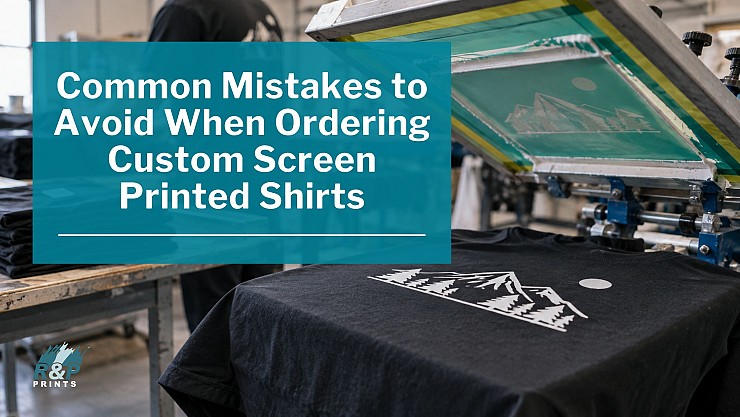
Ordering custom shirts sounds simple on the surface. Choose a design, select a garment, and place the order. In reality, custom apparel printing is a process with multiple technical steps, each one influencing the final result. Businesses ordering uniforms, brands producing merchandise, and event organizers preparing for launches often discover that small decisions early in the process can have significant consequences later.
When everything goes well, screen printed shirts become powerful branding tools. They create team identity, promote events, and extend brand visibility far beyond a single moment. When something goes wrong, however, the result can be costly reprints, rushed production timelines, or apparel that fails to represent the brand properly.
Understanding the most common mistakes before placing an order allows businesses and organizations to avoid those pitfalls. With the right planning and guidance, custom shirts become a smooth and rewarding investment rather than a stressful last minute scramble.
Below are some of the most frequent mistakes made when ordering custom screen printing and how to avoid them.
When the Design Looks Great on Screen but Fails on Fabric: Artwork and Design Quality
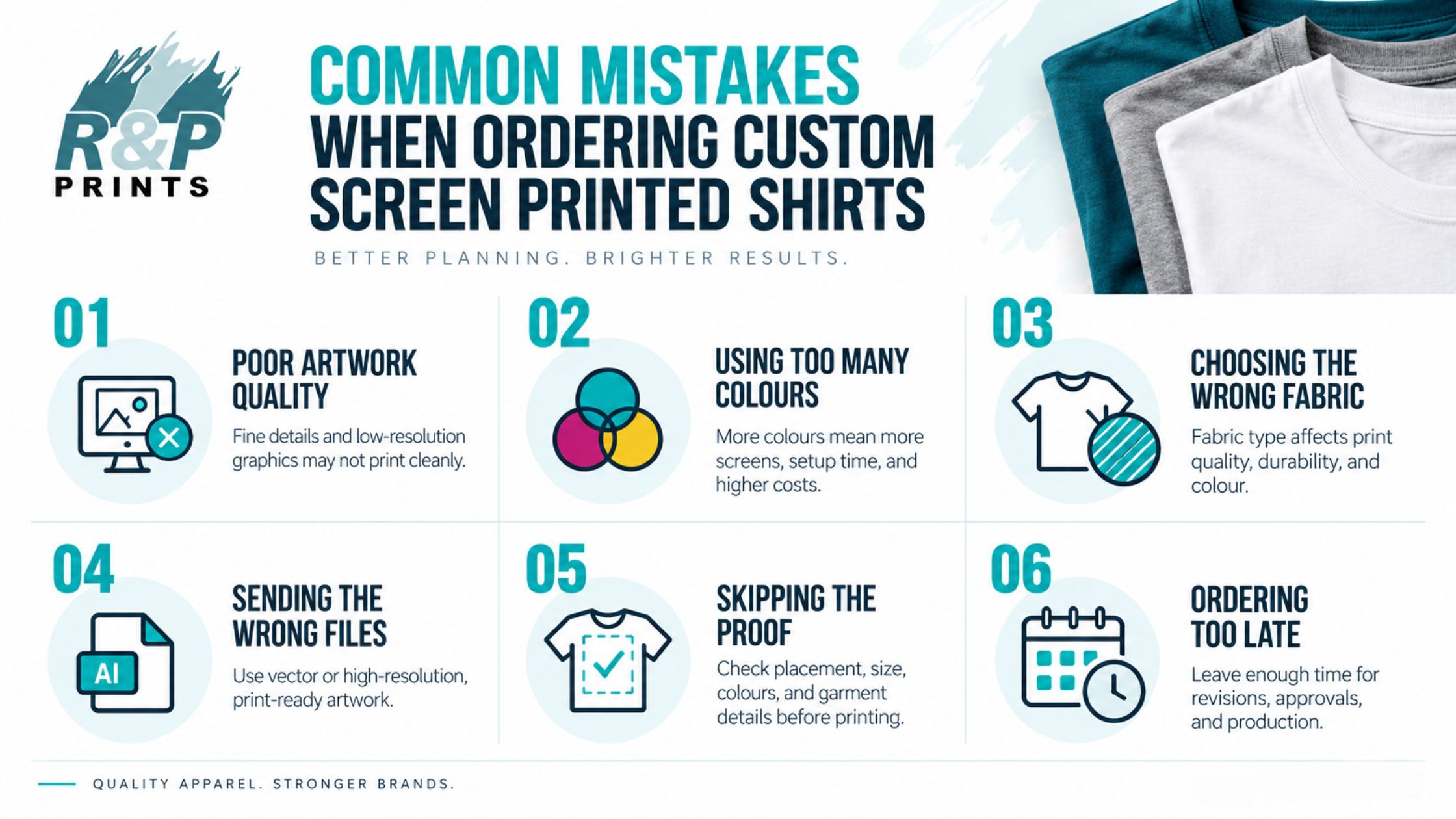
One of the most common screen printing design mistakes begins with artwork that was never prepared for printing in the first place. Designs that look sharp on a computer screen can behave very differently when translated onto fabric.
Screen printing relies on separate colour screens and precise ink layering, a technique widely documented in textile printing research such as this academic overview of screen printing methods.
If a design includes extremely fine details, gradients, or low resolution graphics, the final print may appear blurry, uneven, or overly complex.
Professional print shops evaluate artwork before production begins. Experienced teams offering custom screen printing services review line thickness, colour separations, and resolution to ensure the design will translate cleanly to fabric.
Before submitting artwork, consider these basic principles:
- Use vector files whenever possible
- Avoid excessive detail that may not reproduce well in ink
- Limit colour complexity unless the design requires it.
Thoughtful design preparation ensures the printed result reflects the original vision rather than becoming a compromised version of it.
Not All Print Shops Operate the Same: Choosing the Right Vendor or Service
\Another costly mistake is selecting a printer based solely on price. Screen printing is both a technical craft and a production process. The experience and infrastructure behind a print shop can dramatically influence the outcome.
Reliable vendors review artwork, explain garment choices, and guide clients through the production process. Less experienced providers may simply accept files and proceed without verifying whether the design or garment will work properly.
Organizations looking for custom t-shirts in Toronto often discover that the most valuable print partners act as consultants rather than order takers. They identify potential problems early and help customers make adjustments that improve both quality and cost efficiency.
Working with an experienced vendor also ensures that issues like ink compatibility, garment shrinkage, and print placement are addressed before production begins. This kind of guidance protects the customer’s investment and avoids unnecessary delays.
Too Many Colours, Too Many Screens: Colour and Printing Method Considerations
Colour selection plays a major role in both visual impact and production cost. Many customers underestimate how screen printing works and assume any digital design can be reproduced easily.
In reality, each colour in a screen printed design requires its own screen during production, a fundamental part of the textile printing workflow explained in this textile printing guide from Cotton Incorporated. More colours mean more setup time and higher costs.
Understanding the relationship between colour and printing technique is essential for making informed design decisions. Customers who spend time understanding screen printing often discover that simplifying the colour palette can significantly improve both efficiency and visual clarity.
In many cases, a well designed two or three colour print looks stronger than a complex multi colour layout. Simpler colour structures also produce more consistent results across large production runs, a principle commonly discussed in textile printing method guides used in textile education programs.
Strategic colour choices can therefore enhance both the visual impact and the production efficiency of the final garment.
The Fabric Matters More Than You Think: Fabric and Material Selection
Garment selection is another area where mistakes frequently occur. Customers often focus exclusively on the design while overlooking how the shirt itself affects print quality.
Different fabrics absorb ink differently. Textile research on printing technology on textile fibers shows that fiber composition directly influences ink adhesion, durability, and colour clarity.
Cotton typically produces vibrant prints because the fibers accept ink well. Blended materials, particularly polyester heavy fabrics, may require special inks or printing techniques to achieve the same effect.
Organizations ordering custom logo t-shirts for staff uniforms, events, or promotional merchandise should consider how the garment will actually be used.
Questions to ask include:
- Will the shirts be worn indoors or outdoors?
- Do they need to withstand frequent washing?
- Is comfort more important than durability?
Choosing the right fabric ensures the printed design performs well over time rather than fading, cracking, or losing clarity after repeated use.
Sending the Wrong File Format: File Preparation and Submission
File preparation errors are among the most frequent production delays in custom apparel printing. Designers often submit files that work well for digital display but are not suitable for screen printing.
Common design file mistakes include low resolution images, flattened artwork, incorrect colour modes, and missing fonts. These issues force printers to request revisions before production can begin.
Proper file preparation generally requires:
- Vector artwork or high resolution files
- Outlined fonts
- Separated colour layers when applicable
- Transparent backgrounds where needed
Experienced print teams review files carefully before production. However, preparing files correctly from the start reduces turnaround time and ensures the design remains true to its original concept. When artwork arrives ready for production, the entire process moves more efficiently.
Skipping the Proofing Step: Order Proofing and Approval Process
Once artwork and garment choices are finalized, the proofing stage becomes critical. This step allows the customer to review placement, colour accuracy, and sizing before production begins.
Some buyers rush through this step or skip it entirely, assuming everything will look correct. Unfortunately, small adjustments such as logo placement or print size can significantly affect the visual balance of the shirt.
Businesses ordering corporate apparel printing for staff uniforms or promotional events should treat proof approval as a quality control checkpoint. Taking time to verify design placement, ink colours, and garment style helps prevent misunderstandings that could affect the entire order.
Careful proof review protects both the brand image and the financial investment behind the order.
Waiting Too Long to Order: Production Timeline and Expectations
Screen printing is not an instant process. Industrial printing workflows involve multiple stages including artwork preparation, ink mixing, screen setup, printing, curing, and finishing. These steps are described in technical overviews such as this EPA guide to textile printing operations.
Many customers underestimate how long production actually takes. Orders are sometimes placed only days before an event, leaving little room for revisions or unexpected delays.
Organizations planning bulk t-shirt printing for conferences, product launches, or charity events should begin the process several weeks in advance whenever possible.
Early planning allows time for:
- Artwork revisions
- Garment availability checks
- Proof approvals
- Production scheduling
When customers allow adequate time, print shops can focus on quality rather than rushing through production.
Ordering the Wrong Size Mix: Sizing and Fit Accuracy
Sizing mistakes can quickly turn a successful print run into a logistical problem. Event organizers sometimes guess size distributions without considering the audience they are serving.
If most shirts end up being too large or too small, the apparel may go unworn, reducing the effectiveness of the promotional effort.
A practical approach involves reviewing past event data or gathering size information before placing an order. Organizations using wholesale t-shirt printing often benefit from balanced size distributions that reflect real audience demographics.
Typical distributions include larger quantities of medium and large sizes, with smaller quantities of extra small or extended sizes depending on the group. Accurate size planning ensures the shirts are worn and appreciated rather than stored in boxes after the event.
Forgetting Who the Shirts Are For: Target Audience and Branding Alignment
Custom shirts are not just garments. They are brand communication tools. Designs that ignore the audience or context of the event may miss the opportunity to create meaningful impact.
A design intended for a corporate conference may require a different tone than one created for a music festival or community fundraiser. Businesses creating apparel as part of their bulk shirt printing checklist should consider how the design reflects the brand identity and the audience wearing it.
Key questions to ask include:
- Does the design represent the organization clearly?
- Is the messaging appropriate for the audience?
- Will the shirt remain wearable beyond the event itself?
When branding and audience expectations align, custom shirts become long term promotional assets rather than disposable merchandise.
Strong Planning Leads to Strong Prints
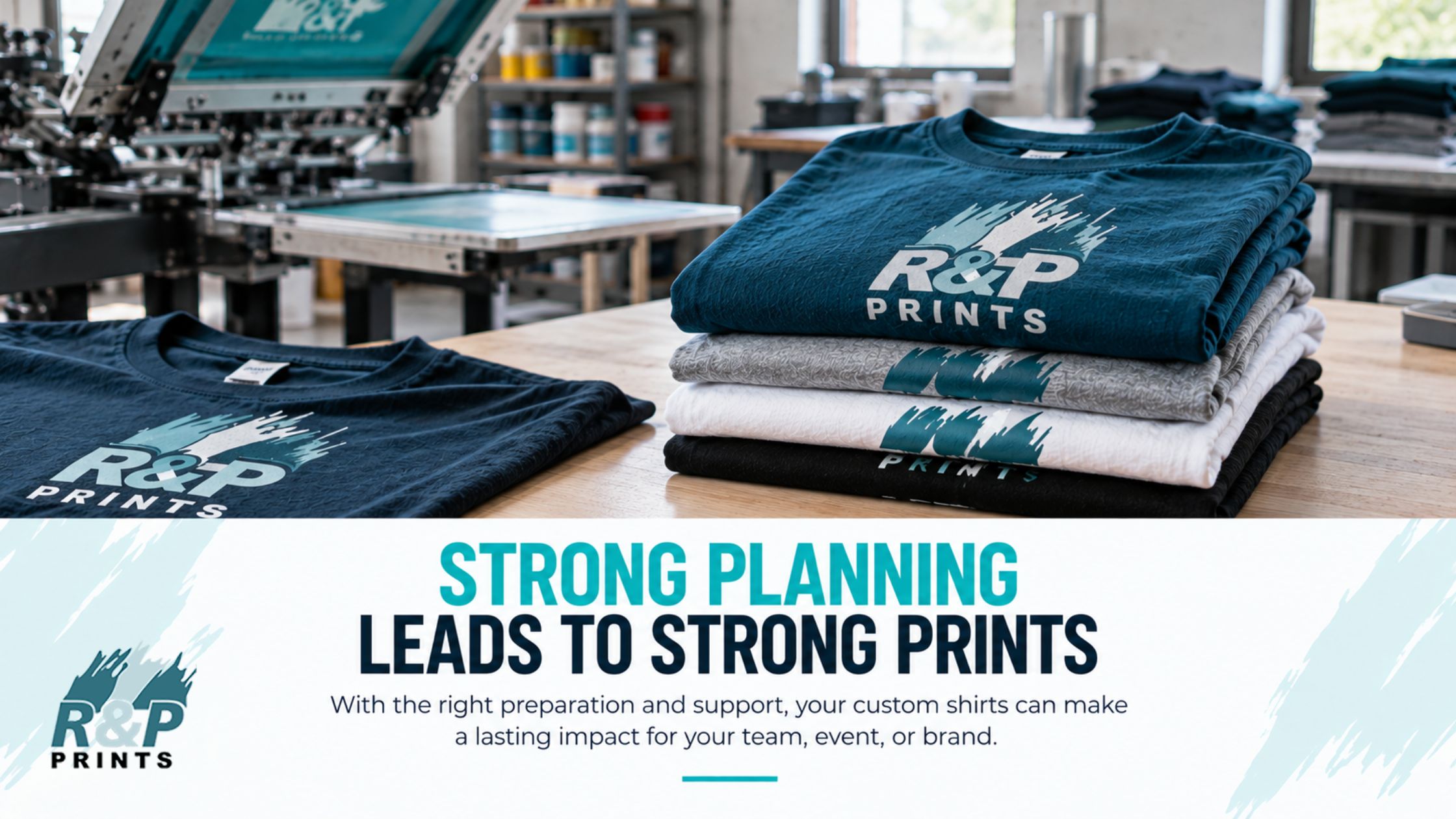
Custom screen printed shirts remain one of the most effective ways to promote a brand, unite a team, or commemorate an event. The process works best when customers understand the technical and logistical elements involved.
Avoiding common mistakes such as poor artwork preparation, incorrect fabric choices, rushed timelines, and unclear proof approvals ensures that the final product meets expectations.
Working with experienced print professionals also makes a significant difference. A knowledgeable print partner provides guidance at every stage of the process, from artwork setup and garment selection to production scheduling and quality control.
When the planning is thoughtful and the process is clear, screen printed shirts become more than promotional items. They become wearable expressions of identity, community, and brand presence.
With the right preparation and support, every order can deliver the consistency, durability, and visual impact that custom apparel printing is meant to achieve.